


 Europe / English
 MEA / English
 Latin America / Español
 APAC / English
 US / English
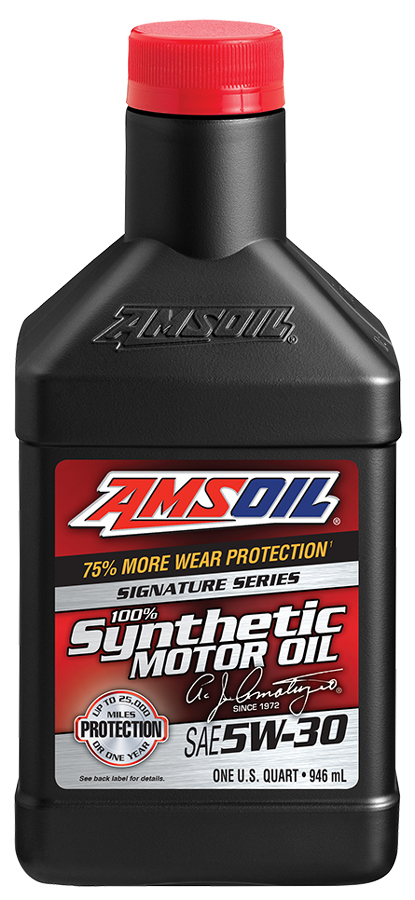
Synthetics remain fluid in cold weather to ease cold starts and improve wear protection.
Well, take a look at the video. We cooled a conventional 5W-30 Engine oil and AMSOIL Signature Series 5W-30 Synthetic Engine Oil to -40º.
As you can see, the conventional oil thickened so much that it barely flowed from the beaker. The AMSOIL product, on the other hand, flows almost immediately.


Why the dramatic performance difference? In answering that question, I’ll also answer the question hoss61761 poses on social media:
Conventional oils contain waxes that solidify when the temperature drops.
This severely impairs the oil’s ability to flow when you crank your engine.
In some cases, the oil can thicken so much that it prevents the crankshaft from spinning fast enough to start the engine.
Prior to using AMSOIL, I had a Cutlass Ciera that was notorious for refusing to start on our cold Minnesota mornings. The dirt-cheap big-box-retailer oil I used back then thickened so much the engine would barely turn over.
Why Synthetics Are a Better Winter Engine oil
Synthetics, in contrast, don’t contain waxes due to the chemical-reaction process used to construct synthetic base oils.
As a result, synthetics demonstrate far better cold-flow properties than conventional oil.
Not only will your vehicle start more easily [I’ve yet to have one of my vehicles using AMSOIL fail to start, even with temps pushing -34°C, the oil will flow more quickly, ensuring oil reaches vital components faster.
This, in turn, maximises wear protection, helping your engine last longer.
Check the Oil’s Pour Point
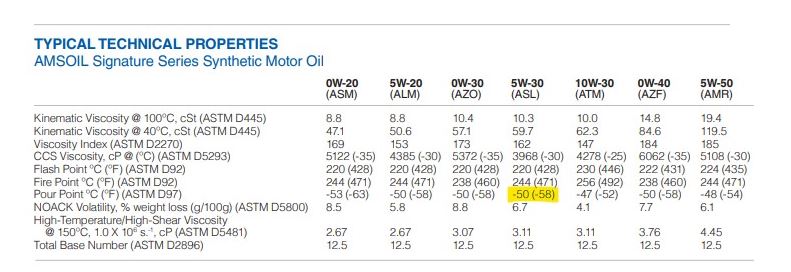
If you want more data to prove synthetics’ superiority as a winter engine oil, cheque the oil’s product data sheet.
Look for the oil’s pour point. Lower numbers indicate better cold-flow, thus better cold-weather performance.
In the example here, you can see that AMSOIL Signature Series 5W-30, the same oil shown in the video above, has a pour point of -50°C.
What Is Cold?
Not to get existential here, but it’s a relevant question.
Folks in the south whose idaea of winter is putting socks on for a couple weeks in January may think they’re off the hook.
Do they need to waste mental energy on motor oil cold-flow properties?
Good Cold-Flow is Important to Southerners, Too
Engineers agree that most engine wear occurs during cold starts. There are several reasons, but two concern us for this discussion:
- Gravity causes much of the oil to fall back into the oil sump, leaving components unprotected
- Cold oil doesn’t flow immediately at startup, temporarily starving the engine of oil
While true that oil thickens more in sub-zero winter weather and causes increased starting difficulty, an engine is considered “cold” after it’s sat long enough to cool to ambient temperature, typically overnight.
As the oil inside your engine cools, its viscosity increases (it thickens).
When it’s time to start your vehicle in the morning, the thicker oil doesn’t flow through the engine as readily as it does when it’s at operating temperature.
It’s during this time that vital engine parts can operate without lubrication, increasing wear. So, even in warm climates, cold-start wear is a problem.
Southerners are well-advised to use a good synthetic oil with excellent cold-flow properties, too.
Thick or Thin Winter Engine Oil?
Motorists sometimes ask if they should use thicker or thinner oil in the winter. Fortunately for them, we wrote a whole post on that topic.
To summarise, use the lowest viscosity oil your vehicle manufacturer recommends in the winter.
Most automakers recommend a lone viscosity year-round. But some allow you to switch to a lower viscosity in winter, which helps improve cold-flow.
If your owner’s manual says you can switch to a lower viscosity oil in winter, go for it.
Shift to Better Winter Protection
While I have you here, I should talk about transmission fluid, too.
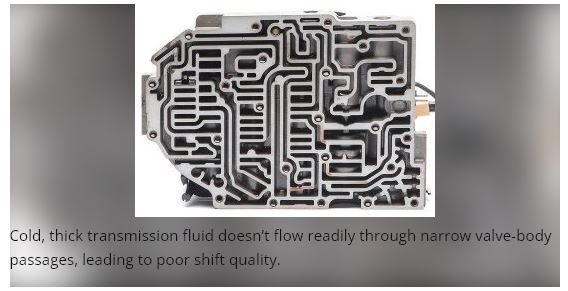
Like motor oil, it thickens in cold weather. The cold, thick fluid doesn’t flow readily through the intricate network of passageways in the transmission valve body or through the small solenoid openings.
What does that mean to you?
- Delayed shifts
- Elongated shifts
- Hard/harsh shifts
- Reduced wear protection
Again, I’ll go to the well of personal experience.
After buying a Honda CR-V several years ago, I switched to AMSOIL synthetic engine oil…but I neglected to change the transmission fluid.
Fast-forward to winter and one of our trademark -29°C mornings with a wind chill pushing past -40°. The Honda started, but she shifted slowly and with much wailing and gnashing of teeth. The entire vehicle shuddered as it reluctantly found second gear heading down the road.
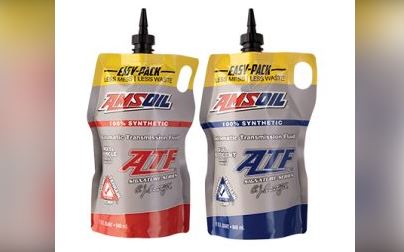
Switching to synthetic transmission fluid solved the problem.
The fluid flows much more readily in the cold, which translates into smoother shifts. It also means the gears and bearing are receiving vital lubrication, too.
Anyone who’s shelled out thousands of dollars for a tranny replacement knows how important that is.
Bottom Line: Synthetic engine oil is a much better choice when you’re looking for a winter engine oil. It flows better for easier starts, smoother shifts and better protection against wear. Upgrade to synthetics to maximise cold-weather protection and performance.